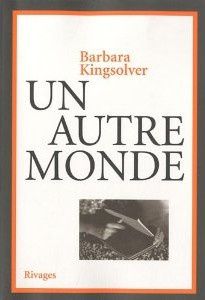
Barbara Kingsolver is one of those writers I wait for. Every new book feels like an event. I bought this one in English first, then switched to the French translation because I didn't want to miss a single nuance. That's how much I trust her.
This novel tells the story of an enigmatic American writer, pieced together posthumously by his secretary using journals, newspaper clippings, letters, and investigation reports. Harrison William Shepherd—half American, half Mexican—leaves the States young, dragged south by his mother who's chasing a wealthy lover and the life she believes she deserves. The kid's just baggage to her: frivolous, flighty, obsessed with appearances. Bored and lonely, he discovers three obsessions that will anchor his entire life: reading as vertigo, writing as intoxication, and the delicate art of bread-making.
That last skill gets him a job years later with an eccentric, committed painter: Diego Rivera, husband of the magnificent, eccentric, sensual Frida Kahlo. Working for this revolutionary artist couple—who love and tear each other apart in equal measure—Shepherd becomes plasterer, cook, secretary, friend. Frida sees a kindred spirit and nicknames him Insolito. But the figure who truly marks his youth is Leon Trotsky, who arrives in Mexico in 1936 and becomes the first person to believe in his writing.
"A novel! Why do you say it won't liberate anyone? Where does a man turn to be free, whether he's poor or rich or even imprisoned? To Dostoevsky! To Gogol!"
This book mixes fiction with real events. It starts as a baroque fairy tale, becomes a historical epic, then transforms into a breathless political thriller. After returning to America, Shepherd becomes a successful writer—and catches the attention of the House Un-American Activities Committee hunting communists. It's a story built around absence, gaps, the missing piece, the blank to fill, what we can't see and what slips away.
"Inside each of us, there's another world. The most important thing is always the one we don't know."
Like her protagonist, Kingsolver talks about the past to illuminate the present. She weaves a meditation on art's place in society, critiques media that lie, invent, twist truth and manipulate opinion. She builds an indictment against an America that positions itself as the beacon of freedom and success while hiding atrocities under the rug: massacres of protesters, internment camps for citizens of foreign origin, politics of terror, rigged trials.
An ambitious novel, breathtaking and dizzying, with subtle construction and dense writing. It confirms what I already knew since The Poisonwood Bible: Barbara Kingsolver is a major voice in American literature. Emotions and sleepless nights guaranteed.
"I'd like to write my books for only one beloved person who, comfortably settled in bed, would turn pages until the last, then let the open book fall gently on their face, and touch their smile or drink their tears."
Translated from American English by Martine Aubert.
Rivages, 2010. – 668 pages.
/image%2F1422307%2F20210119%2Fob_4b6ede_oconnor.jpg)
/image%2F1422307%2F20210101%2Fob_770941_howard.jpg)
/image%2F1422307%2F20201220%2Fob_8a644a_markley.jpg)
Comments
Your analysis hits every mark. Thanks for highlighting this book. I read about forty novels a year, and this is honestly the most striking one I've encountered in a decade. Kingsolver's characters feel genuinely alive—I often felt like watching a great film rather than reading. Her historical work is impeccable, the way she captures 1930s Mexico with Frida, then wartime America, and finally the bitter McCarthy period.
Harrison (or Soli) is more than likeable. Following his journals lets you understand his sensitivity, his nobility of spirit. I laughed at his attraction to Van and how he sees small daily things. I also cried and suffered watching pettiness and mediocrity catch up with him, undermining his talent and confidence.
When I finished, I cried hard. It felt like mourning a friend—one of the few I've really known. Since this was my first Kingsolver, I've moved on to her earlier novels and the surprising, delicious Animal, Vegetable, Miracle about her locavore experience. But I already know I'll reread this one in less than a year, just to be with Harrison again.
Two and a half days without putting it down. This novel is pure marvel. I loved her other books, a lot even, but this is beyond everything. I remember loving a book this much—it was The Cider House Rules by John Irving. Very different, of course, but this one joins my shelf of cherished books to read and reread forever.
I saved your post in my reader without reading it because I wanted to discover this novel myself. After reading and writing my own piece, I came back—discovering we shared the same taste for Another World was pure pleasure!